Research
Molecular Design for Cross-Scale Ion Transport
We design organic ion-conducting materials to understand how deliberately encoded molecular structures are preserved, reorganized, or amplified as they propagate from molecules and polymer chains to condensed phases, electrochemical interfaces, and working energy-storage devices. Rather than treating conductivity, stability, and interfacial compatibility as isolated material properties, we investigate how molecular synthesis and organization jointly determine selective ion transport and electrochemical function. This cross-scale perspective guides our work on sequence-controlled and single-ion polymers, molecular and composite solid electrolytes, covalent organic frameworks, and artificial interphases for solid-state, lithium-metal, and fast-charging batteries.
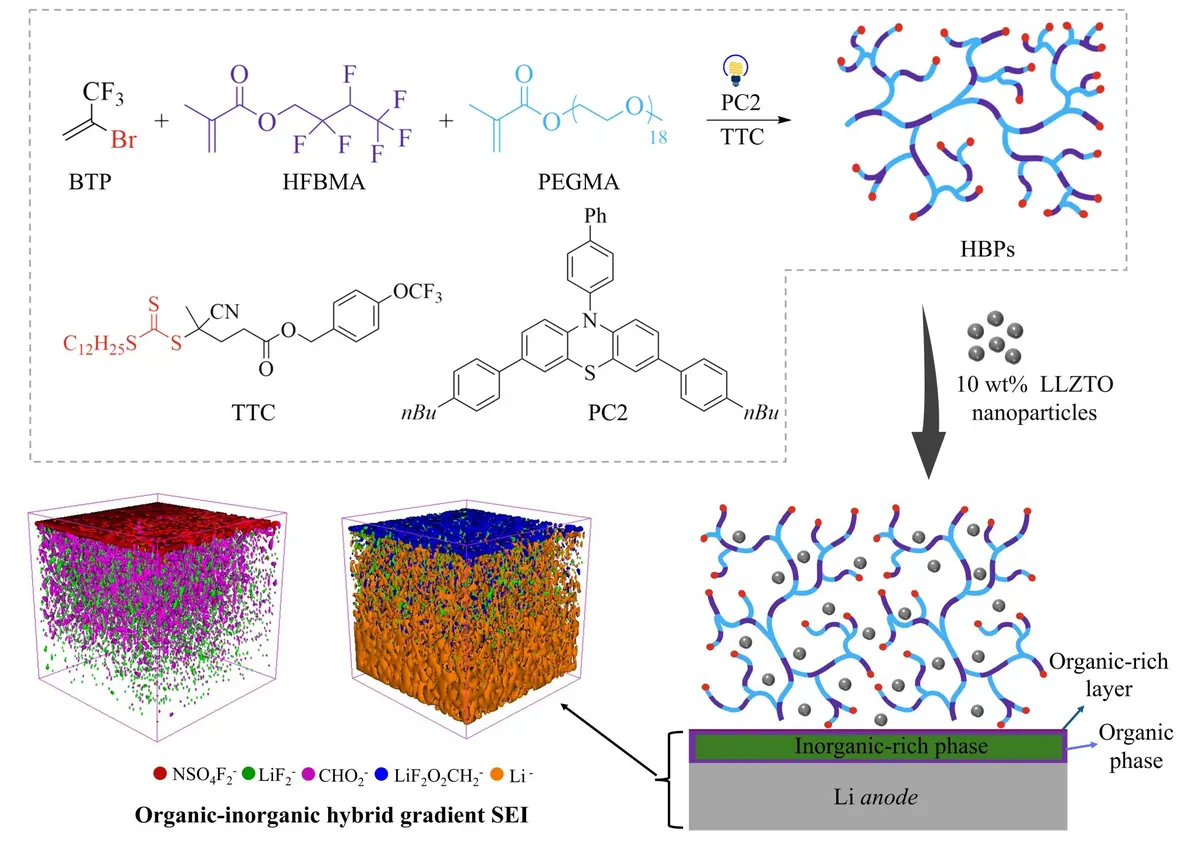
Molecular Design
We develop synthetic strategies that place ionic groups, coordinating sites, fluorinated segments, and dynamic motifs at defined positions within organic molecules and polymer architectures. Sequence control, asymmetric salt design, network topology, and porous frameworks provide complementary routes for regulating local coordination environments. The central question is not only which chemical components are present, but how precisely arranged molecular information determines the structures and functions that emerge at larger scales.
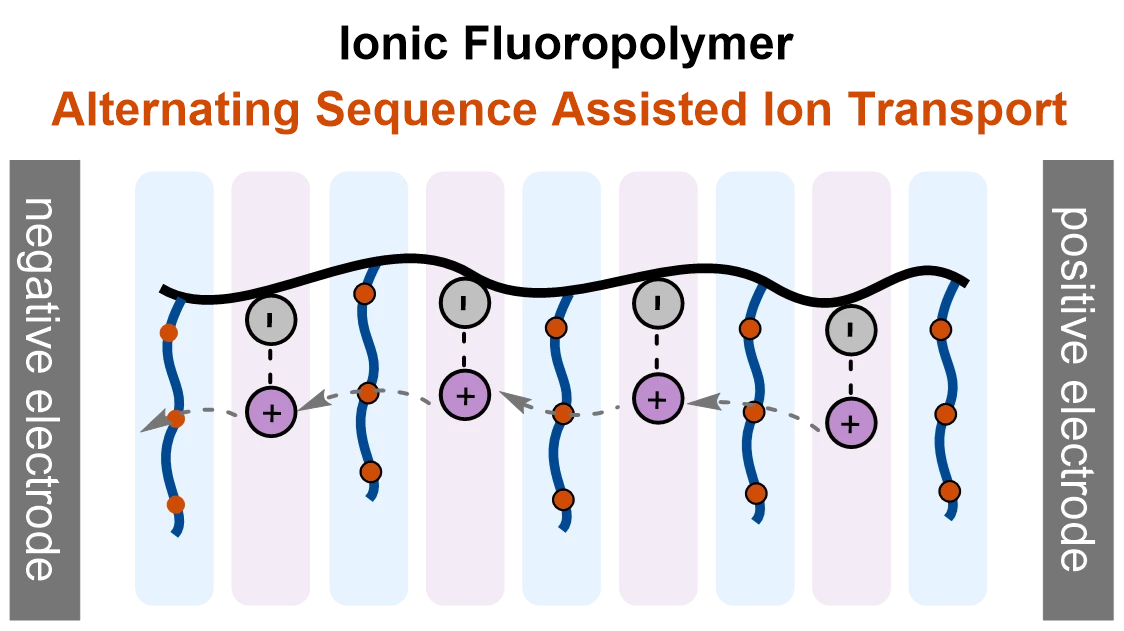
Ion Transport
We investigate how polymer sequence, ion aggregation, segmental dynamics, nanoscale confinement, and condensed-state organization control ion motion. By connecting spectroscopy, electrochemical measurements, structural characterization, and molecular modeling, we seek design rules for achieving rapid and selective transport without sacrificing mechanical integrity or electrochemical stability. Particular attention is paid to transport pathways that cannot be inferred from bulk ionic conductivity alone.
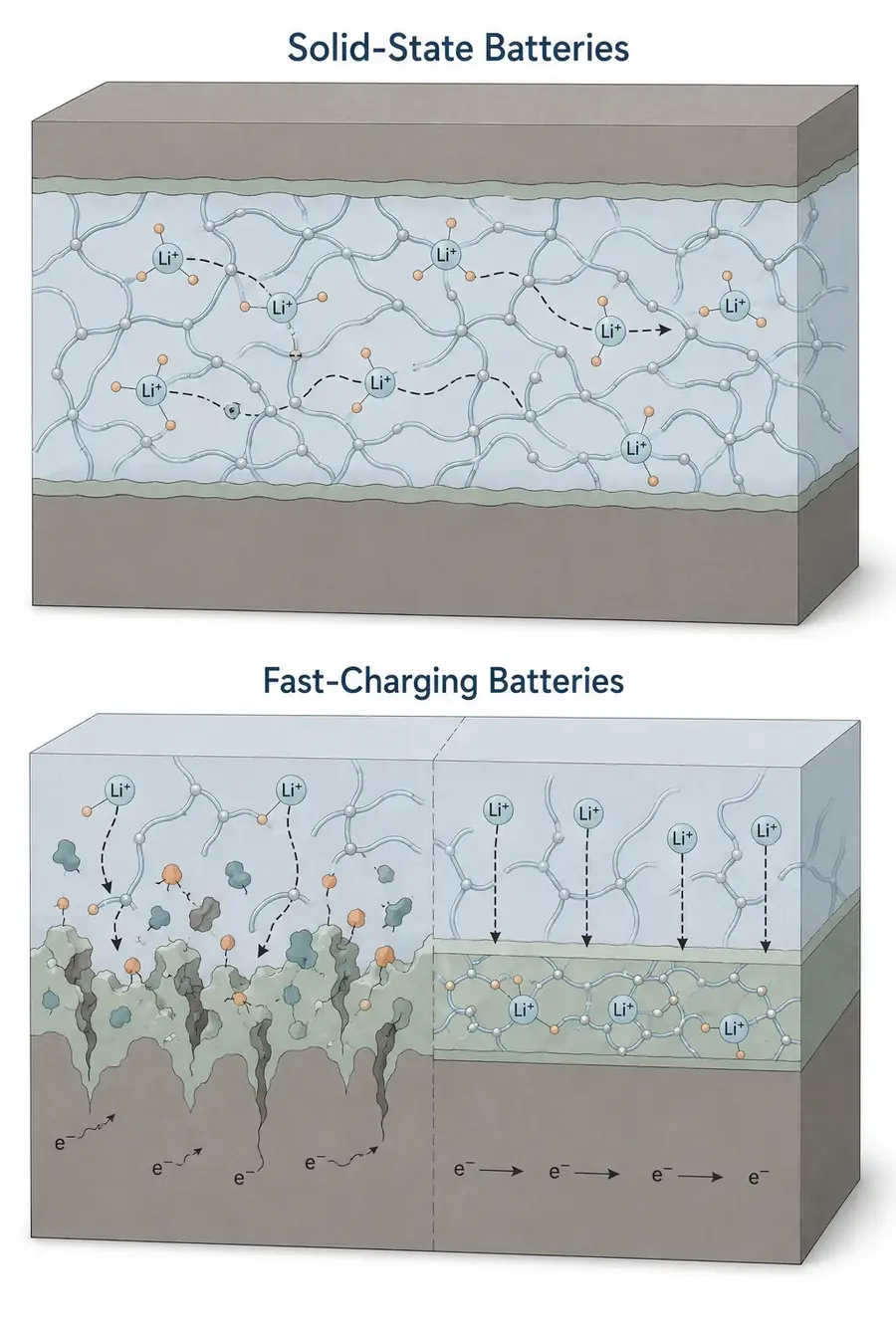
Interfaces & Energy Storage
At electrochemical interfaces, molecular design is tested under device-relevant ion flux, reaction kinetics, and mechanical contact. We focus on two energy-storage platforms: solid-state batteries and fast-charging lithium-metal batteries. In solid-state batteries, people aim to replace liquid electrolytes with solid ion conductors, but this substitution is intrinsically difficult because ion transport in solids must approach liquid-electrolyte performance while maintaining electrochemical stability, mechanical integrity, and persistent solid-solid contact. We design organic ion-conducting materials to regulate coordination environments, segmental dynamics, nanoscale organization, and compliant interphases, enabling ion transport and interface stability to be addressed within the same molecular framework. In fast-charging lithium-metal batteries, these materials are further used to sustain interfacial Li-ion supply and regulate metal deposition under minute-scale charging. These platforms examine whether molecularly designed ion conductors can translate structure into durable electrochemical function.